Buy Crypto

Buy Crypto on be1crypto.com

Card, bank transfer or stablecoin: four steps from signup to settled coins, with every fee shown before you confirm.

What it actually costs to buy crypto on be1crypto.com

Buying your first coin on be1crypto.com takes about twenty minutes end to end, and most of that is identity verification rather than the purchase itself. The part worth slowing down for is cost. Two people can buy the same $5,000 of Bitcoin on the same afternoon and pay $25 or $5 in fees, depending on one choice: the one-tap instant buy, or a limit order on the terminal. This page sets out the funding rails, the arithmetic behind that gap, and the documents you need before any of it works.

Crypto is a volatile, largely unregulated asset class. Balances here are not bank deposits and carry no FDIC or SIPC protection. Before you fund anything, it is worth reading the SEC Office of Investor Education's crypto alerts and Investopedia's plain-language explainer of how a blockchain records ownership. Our own risk disclaimer spells out what we do and do not promise.

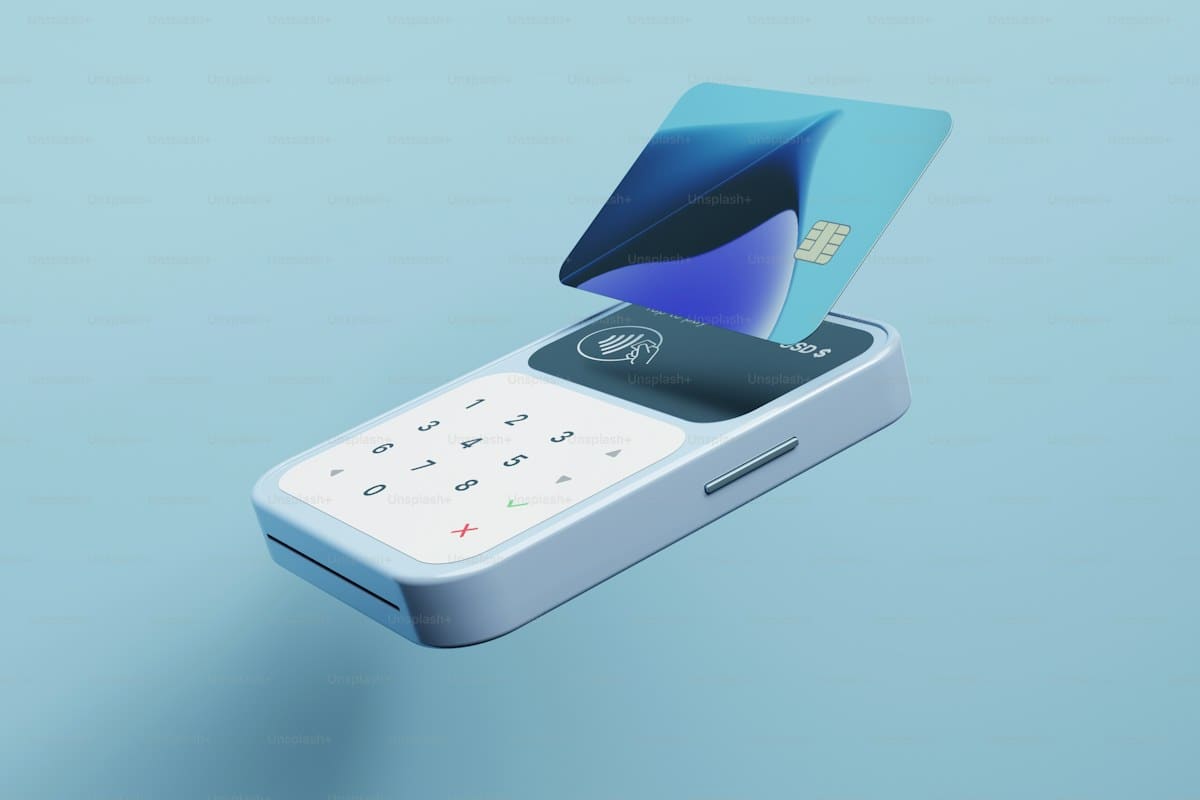
Smartphone and payment card used to buy crypto on be1crypto.com
Your funding method sets both the speed of a purchase and what it costs.
The buying flow

Four steps, with honest timings

No stage is instant except the last one. Here is how long each part really takes, so you can plan a purchase around a deposit rather than watching a pending screen.

  1. Create your account

    About 2 minutes

    Email address, a password, and a country of residence. Two-factor authentication with an authenticator app is set up in the same flow and is mandatory before your first withdrawal. SMS codes are offered only as a backup, because SIM-swap attacks defeat them.

  2. Verify your identity

    Median 9 minutes, up to 24 hours

    Upload a government photo ID and complete a liveness selfie. Most checks clear automatically in under ten minutes. Blurry document photos, a name mismatch, or a deposit flagged for source-of-funds review route the case to a human reviewer, which adds up to a business day.

  3. Fund the account

    Instant to 3 business days

    Pick the rail that matches your urgency and size. Cards are instant and expensive, ACH and SEPA are free and slower, and a stablecoin transfer costs only the network fee.

  4. Place your buy

    Seconds to fill

    Use one-tap instant buy for convenience, or open the terminal and set a limit price. Filled orders credit your spot balance immediately. Minimum order size is $10, so you can test the whole path with a trivial amount before committing real money.

Step two is where most accounts stall. The how it works walkthrough covers what happens to your documents after upload, and our security page explains the encryption and retention rules applied to them.

Funding methods

Speed, fee and limit by payment rail

Card payments buy you minutes and cost 2.5%. Bank rails are free and cost you days. Pick deliberately rather than by default.

Comparison of funding methods on be1crypto.com by speed, fee, daily limit and best use
Method Speed Fee Daily limit Best for
Debit / credit card Instant, under 2 minutes 2.5% processor fee $10 – $5,000 per day A first small buy, or when you need the position on right now
ACH transfer (US) 1 – 3 business days to clear Free Up to $25,000 per day Recurring buys and routine US funding
Domestic wire (US) Same business day if sent before 3:00 pm ET $10 in, $25 out No platform cap; your bank sets one Large one-off deposits above the ACH ceiling
SEPA transfer (EUR) 0 – 1 business day Free in, EUR 1 out Up to EUR 200,000 per day European accounts funding in euro
Stablecoin transfer 2 – 15 minutes after network confirmations Network fee only, no platform fee No platform cap Moving value in from another exchange or a self-custody wallet

Fees above cover getting money in. Trading costs sit separately in the published fee schedule, and withdrawal costs move with network conditions you can check on a public tracker such as CoinGecko.

Instant buy vs limit order

The same $5,000, two very different bills

An instant buy is a quote. A limit order is an instruction. The difference is convenience priced as a spread instead of billed as a fee.

Instant buy

You get a locked quote with the markup already inside the price, tap once, and hold the asset seconds later. The advertised spread on major pairs is 0.50%. No fee line ever appears, because the cost is the price. That is exactly why it gets overlooked.

  • Fills immediately at a guaranteed price
  • No order book to read
  • Cost is embedded, not itemized

Limit order

You name a price on the trading terminal and wait. If your order rests on the book and someone else trades into it, you pay the maker fee, from 0.10%. If you cross the spread to fill right away, you pay the taker fee instead, from 0.20%.

  • Cheapest route, and the fee is itemized
  • May not fill if the market moves away
  • Requires you to pick a price

Worked example: $5,000 of Bitcoin at $64,182.40

Cost comparison of a $5,000 Bitcoin purchase by instant buy, maker limit order and taker limit order
Route Cost rate Cost in dollars BTC received
Instant buy 0.50% spread $25.00 most expensive 0.0775154
Limit order, maker 0.10% fee $5.00 cheapest 0.0778251
Limit order, taker 0.20% fee $10.00 0.0777472

The instant buy applies its 0.50% markup to the price, so you actually transact at $64,503.31 rather than $64,182.40, and $5,000 converts to 0.0775154 BTC. The maker order transacts at the market price and charges 0.10% on the fill, leaving 0.0778251 BTC. That gap of 0.0003097 BTC is worth about $19.88 at the same price: the $25.00 spread minus the $5.00 fee, give or take rounding on the fee basis.

Scale it and the pattern matters more than the single trade. Twelve monthly $5,000 buys cost $300 a year through instant buy against $60 a year as a maker: the same $60,000 of exposure, $240 kept. The honest counterpoint is that a limit order can sit unfilled while the price runs away, and missing a 3% move on $5,000 costs $150, far more than the $20 you saved. Convenience is not always the wrong purchase. It should just be a deliberate one.
Person setting up a recurring crypto buy on the be1crypto.com mobile app
Recurring buys run on a schedule you set: daily, weekly or on a fixed day each month.

Recurring buys and what dollar-cost averaging really does

A recurring buy debits a fixed amount on a schedule and converts it at whatever the price is that day. Set $200 weekly and you buy fewer coins when the market is expensive and more when it is cheap, which pulls your average entry toward the period's mean.

Be precise about the benefit. Dollar-cost averaging reduces timing risk: the risk that you put your entire stake in on the single worst day of the year. It does nothing about loss risk. If an asset falls 60% over two years and stays there, a disciplined weekly buyer simply arrives at the bottom with more coins and a smaller loss than a lump-sum buyer who entered at the top. That is a better outcome, not a safe one. Anyone describing DCA as a way to avoid losing money is selling something.

Two practical notes. Fund recurring buys from ACH or SEPA rather than a card, or the 2.5% processor fee compounds across every single execution. And check what you are averaging into. Thin, low-volume tokens do not mean-revert the way liquid majors do. Volume and depth for every listed pair are on the live markets page.

Before you start

Minimums, regions and verification documents

Minimum order: $10

Ten dollars, or the local-currency equivalent, on instant buys, limit orders and recurring buys. Fractional purchases are standard, so you are never required to buy a whole coin.

Supported regions

Accounts in 90+ countries; card purchases in 40+. Sanctioned jurisdictions are blocked outright, and a few US states are unavailable pending licensing. Eligibility is checked against your verified address, not your IP.

One verification, all products

A single approved check unlocks buying, the terminal and the earn products. Re-verification is triggered only by a document expiry or a material change to your account details.

Documents required for KYC

Government photo ID
Passport, driver license or national ID card. The full document must be in frame, in focus, and unexpired.
Liveness selfie
A short in-browser capture that matches your face to the ID photo. It replaces the old "hold up a handwritten note" step.
Proof of address
A utility bill or bank statement dated within the last 90 days. Required in most jurisdictions before fiat withdrawal is enabled.
Tax identification number
US residents supply an SSN or ITIN. This is a reporting requirement, not an optional field we can waive.
Source of funds
Only for cumulative deposits above $50,000: a payslip, sale contract or account statement showing where the money came from.

These checks are not a design choice. Exchanges handling fiat are money services businesses and are obliged to identify their customers under anti-money-laundering rules; the background on know-your-customer requirements explains why the same five documents appear at every regulated venue. What differs between platforms is how the data is stored afterward — ours is covered in the privacy policy. If a check stalls or a document keeps getting rejected, contact support with your case reference rather than re-uploading repeatedly, which resets the queue position.

Ready to place your first order?

Verify once, fund with the rail that fits, and start from $10. Compare the full cost first on our fee schedule.