Platform for Stocks and Crypto: One Account or Two?
One account is simpler. But the crypto side is usually narrower, harder to withdraw, and protected by nothing that looks like SIPC.
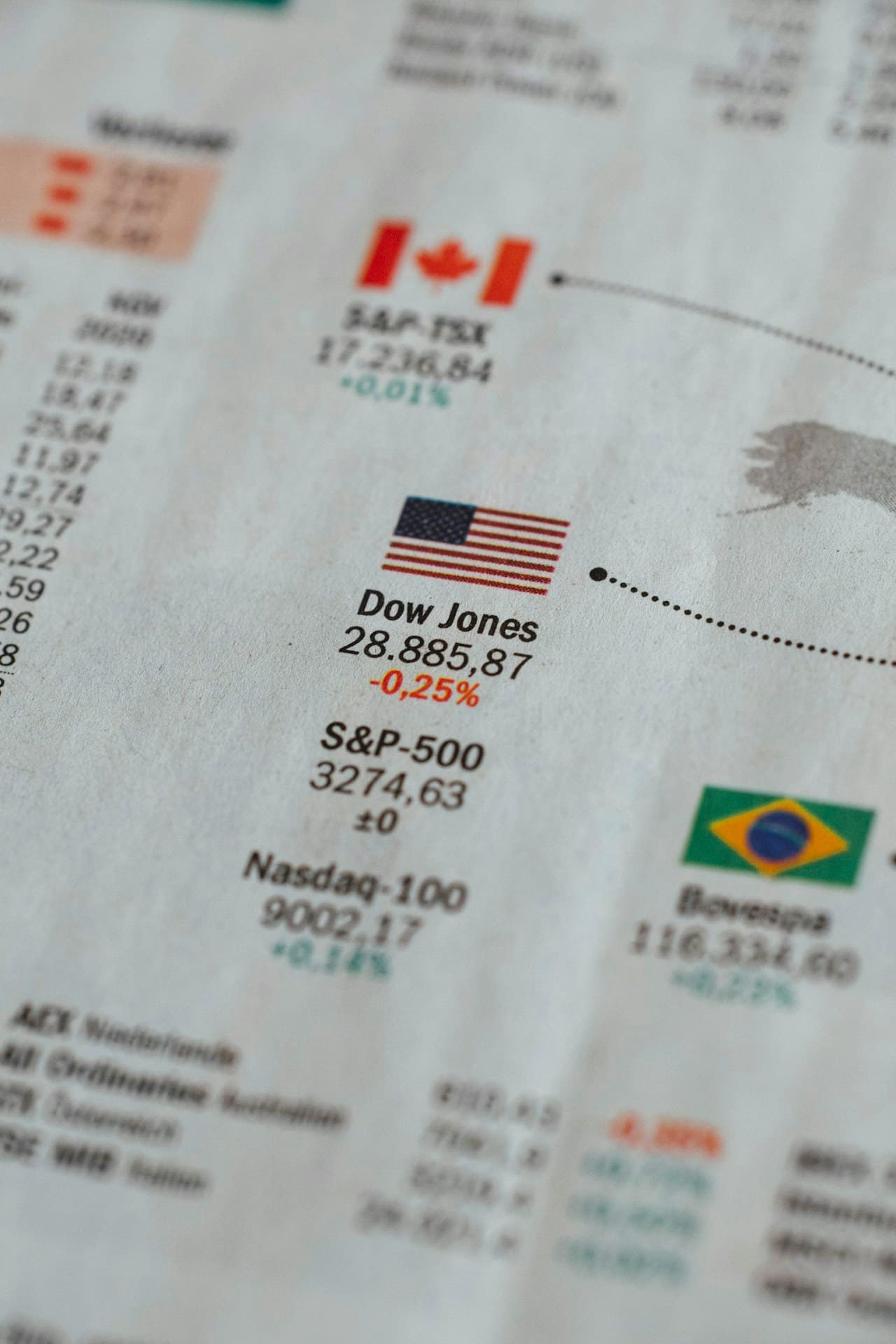
A platform for stocks and crypto is a single brokerage account that lists equities and digital assets on the same screen, under one login, funded from one bank connection. The appeal is real: fewer passwords, one deposit rail, one set of tax documents in February, and a portfolio view showing your whole net worth as one number instead of two.
Before anything else, the disclosure that shapes this piece: be1crypto.com does not offer stocks, ETFs, or tokenized equities. We are crypto only, with 250+ listed assets, spot trading, instant buys, and interest-bearing accounts. If you came here looking for one account that holds both Apple shares and bitcoin, this is not that account.
The reason is not modesty. Running equities and digital assets on one balance sheet means two regulatory perimeters, two settlement models, and two custody stacks inside one company. We chose depth in one lane: a wide asset menu and a single custody model, with 95% of customer assets in geographically distributed cold storage behind a 3-of-5 MPC withdrawal quorum. That focus is a real trade-off, not a free win, and for some people the combined account is the better answer. This article should help you tell which person you are.
What a platform for stocks and crypto actually gives you
Four things, none of them trivial.
One login and one funding rail. Your paycheck lands in checking, an ACH transfer moves it to the broker, and from there it becomes an index fund or a coin without a second transfer. Every hop you remove is a hop where something can go wrong.
One portfolio view. Seeing 85% equities and 15% crypto on one chart is how most people stay disciplined about allocation. Two apps means two numbers and a spreadsheet, and spreadsheets get stale.
One tax export. One consolidated statement beats reconciling a brokerage 1099-B against a separate crypto 1099-DA and a CSV of trades.
Simpler rebalancing. Selling equities to buy crypto inside one account is two clicks, not a sale, a withdrawal, a wait, and a deposit.
If your crypto position is a small strategic sleeve you plan to hold and rebalance twice a year, the operational simplicity of one account is worth more than most of what you give up. Be honest about which category you are in before optimizing for features you will never use.
What the combined account costs you
The costs are structural, not cosmetic, and each traces back to the same fact: crypto is a bolt-on for a securities broker, not the core business.
- A much narrower asset menu. A combined platform typically lists between four and thirty coins; a dedicated venue lists hundreds. If your thesis involves anything outside the top ten by market cap, the combined account will not hold it. Check a full market list before assuming your target asset is there.
- Withdrawal to self-custody is often restricted or unavailable. Several large brokers let you buy and sell crypto but never let it leave. You own an exposure, not a bearer asset. If the phrase “not your keys, not your coins” means anything to you, this is the line that matters most.
- Reduced order types. Market and limit, sometimes only market. No post-only, no maker rebates, no sub-second API access. If you care about execution quality, this is where the combined account quietly costs you money.
- Wider effective pricing. Brokers usually quote crypto as one all-in spread near 1%, where a dedicated venue quotes maker and taker separately and rewards passive orders.
- Two protection regimes wearing one interface. The big one, and it gets its own section below.
Combined platform versus a dedicated crypto platform plus a broker
Eight dimensions, judged honestly. Neither column wins outright.
| Dimension | Combined stocks and crypto platform | Dedicated crypto platform plus separate broker |
|---|---|---|
| Logins and funding | One account, one ACH link, one transfer | Two accounts, two links, two transfers |
| Crypto asset range | Typically 4 to 30 coins | 250+ assets on be1crypto.com |
| Crypto order types | Market and limit, sometimes market only | Full spot book, maker and taker pricing, API access |
| Self-custody withdrawal | Often restricted or unavailable | Standard, at network cost |
| Crypto trading cost | Usually one all-in spread near 1% | 0.10% maker / 0.20% taker at entry tier, 0.00% / 0.04% at top tier |
| Protection regime | SIPC on securities only, nothing equivalent on crypto | SIPC at the broker, no statutory equivalent on crypto, disclosed cold storage |
| Tax and records | One consolidated statement | Two statements to reconcile |
| Portfolio view | Unified by default | Manual, spreadsheet or aggregator |
Read the table as a sorting device, not a scoreboard. If rows one, seven and eight are what you care about, the left column is your answer. If rows two through six matter more, the right column is.
The protection regimes are different, and one screen does not merge them
When you hold stocks at a US brokerage and that brokerage fails, SIPC steps in. It is a nonprofit membership corporation created by Congress that protects customer cash and securities at a failed member brokerage, currently up to $500,000 per customer, of which up to $250,000 may be cash. It is not insurance against your stock going down. It is protection against your broker disappearing with the shares.
Crypto has no equivalent: no federal statutory scheme restores your coins if the platform holding them fails. In bankruptcy, crypto platform customers have generally been treated as unsecured creditors, which means you join a queue and receive cents on the dollar years later, if anything. FINRA’s investor materials and the standing investor.gov crypto alert say versions of the same thing.
Putting a stock and a coin on the same screen does not put them under the same protection. A combined account can show a $50,000 equity position and a $50,000 crypto position in identical typeface, and only one of those lines has a federal backstop behind the custodian.
Three corollaries that follow directly:
- A combined account can make crypto feel safer than it is. Interface consistency is a powerful and misleading signal. The crypto line in a brokerage app is not safer than the same coin elsewhere simply because it sits next to your ETFs.
- “FDIC insured” almost always refers to the cash, not the coins. Uninvested dollars swept to a partner bank may be insured; the crypto is not, and the disclosure page will say so.
- Custody disclosure matters more than any logo. Ask what fraction sits in cold storage, how withdrawals are authorized, and whether there is a current audit. be1crypto.com publishes 95% cold storage, a 3-of-5 MPC withdrawal quorum, and a SOC 2 Type II report, and is registered with FinCEN as a Money Services Business. That registration is a compliance obligation, not an endorsement and not a substitute for SIPC.
Verifying claims like these is its own skill; our walkthrough on how to check a platform’s legitimacy covers the paper trail.
Market hours, settlement, and tax treatment
The two asset classes differ mechanically, which is why one interface over both is harder than it looks.
| Mechanic | US equities | Crypto |
|---|---|---|
| Trading hours | 9:30 to 16:00 ET on weekdays, plus extended sessions | 24 hours, 7 days, including holidays |
| Settlement | T+1 since May 2024 | On-chain confirmation in minutes; internal transfers instant |
| Corporate actions | Dividends, splits, proxy votes | None |
| Price source | Consolidated tape across lit venues | Venue-specific order book |
| Tax form (US) | 1099-B | 1099-DA, basis reporting phasing in |
| Wash-sale rule | Applies to stocks and securities | Has not been extended to crypto as of this writing |
Two consequences worth planning around. First, a weekend crypto drawdown cannot be hedged with equities until Monday, so a combined portfolio is not a continuously manageable one. Second, the wash-sale asymmetry is a legal planning consideration today and a frequent target of proposed legislation, so treat it as a moving rule and confirm the current position on irs.gov or with a tax professional.
A worked example: what the crypto sleeve really costs
Take a concrete case. A $100,000 portfolio targeting 85% equities and 15% crypto, so a $15,000 crypto sleeve. You build the sleeve once, then rebalance twice a year, shifting roughly 10% of it each time, or $1,500. Each rebalance sells one coin and buys another inside the sleeve, putting about $3,000 of crypto notional across the tape.
Year-one crypto notional traded:
- Initial build: $15,000
- Two rebalances at $3,000 each: $6,000
- Total notional: $21,000
Now price that same $21,000 four ways:
| Execution route | Rate | Year-one cost |
|---|---|---|
| Combined broker, all-in spread | 1.00% | $210.00 |
| be1crypto.com instant buy | 0.50% | $105.00 |
| be1crypto.com spot, entry-tier taker | 0.20% | $42.00 |
| be1crypto.com spot, entry-tier maker | 0.10% | $21.00 |
Every row is $21,000 times the rate: 1.00% gives $210, 0.50% gives $105, 0.20% gives $42, 0.10% gives $21.
The gap between the combined broker and entry-tier spot pricing is $210 minus $42, or $168 in year one. That is about 1.1% of the crypto sleeve and roughly 0.17% of the total portfolio.
Now the honest part. For this investor, $168 a year is not the deciding factor. It is real money, and over ten years of identical activity it is $1,680 before any growth on the savings, but it is not the reason to run two accounts. Those reasons are asset range, order control, and the ability to withdraw to a wallet you control. The fee saving is a bonus, not the argument. If cost genuinely is your primary lens, our breakdown of what trading actually costs goes deeper, and the full fee schedule has every tier.
The picture inverts for an active trader. Move $500,000 of notional in a year and the same comparison is $5,000 against $1,000. An account that has worked its way to the top volume tier pays 0.04% taker, which on that same $500,000 is $200. At that point cost is the argument.
Running a clean two-platform setup
Two accounts need discipline or they turn into the mess people fear. Four habits cover most of it.
1. One funding direction per rail. Pick a single checking account as the hub. Money goes hub to broker and hub to crypto platform, never broker to crypto platform. ACH and SEPA deposits are free on be1crypto.com, wires cost $15, and cards 1.49%, so route recurring contributions over ACH or SEPA.
2. Export on a schedule, not in April. Download the trade history from both venues on the last day of each quarter into one folder. Reconstructing cost basis after the fact is the most expensive administrative mistake in this setup.
3. Rebalance with new money first. Instead of selling equities to buy crypto, direct the next two contributions to whichever side is underweight. No taxable event, no cross-platform transfer, no settlement wait.
4. Keep one allocation sheet. A four-row spreadsheet with target percentage, current value, and drift, updated monthly, is enough. It also makes the tax export legible.
If the underlying question is what a platform actually is and what it holds, this piece on crypto versus the venue you trade it on is the foundation this article assumes.
Who should use a platform for stocks and crypto, and who should not
A combined account is likely right for you if:
- Crypto will be under roughly 10% of your portfolio and you intend to hold, not trade.
- You want exposure to bitcoin and ether and nothing beyond them.
- You have no intention of ever moving coins to a hardware wallet.
- Administrative simplicity is worth more to you than roughly one percent a year on the crypto sleeve.
- You are already at a broker you trust and the crypto menu covers your thesis.
Two accounts are likely right for you if:
- You want any asset outside the top ten, or an interest-bearing account for the coins you hold.
- Self-custody matters to you, now or eventually.
- You place limit orders, care about maker pricing, or use an API.
- You trade often enough that a 1% spread is a meaningful annual drag.
- You want the crypto venue’s custody model disclosed in detail, not buried in a footnote.
Neither is right for you if you are borrowing to invest, cannot tolerate a 70% drawdown in the crypto sleeve, or are not clear on why you want crypto exposure at all. No platform architecture fixes an allocation you cannot explain.
What to do next
If the combined account fits, open one at a broker whose crypto disclosures you have read in full, and check whether withdrawal to an external wallet is permitted. That one answer tells you more about the product than the fee page does.
If two accounts fit, the sequence is straightforward: keep the brokerage where it is, open the crypto account separately, verify the custody disclosures before funding, and start with a deposit small enough that a mistake is a lesson rather than a loss. The risk disclaimer is worth reading before that first deposit rather than after it.
Nothing here is investment advice, and be1crypto.com’s FinCEN registration does not make it an advisor. Crypto is volatile, uninsured, and capable of going to zero. The honest shape of the trade is this: one account buys you simplicity, two accounts buy you range and control, and the protection gap between stocks and crypto exists in both cases regardless of which screen displays them.
Frequently asked questions
Is there one platform for stocks and crypto?
Yes, several US brokerages list equities and a short crypto menu inside one account. The convenience is real: one login, one funding rail, one tax export. The trade-off is that the crypto side is usually limited to a handful of large coins, often cannot be withdrawn to a private wallet, and carries no SIPC protection even though the stocks in that same account do.
Does SIPC cover crypto held at a broker?
No. SIPC protects cash and securities at a failed US brokerage up to statutory limits, and crypto is not a security for that purpose. If a platform holding your coins fails, you are an unsecured creditor in bankruptcy rather than a protected customer. That is true whether the coins sit at a crypto-only venue or in a combined account beside your stocks.
Does be1crypto.com offer stocks?
No. be1crypto.com is crypto only, with 250-plus listed assets, spot trading, instant buys and interest-bearing accounts. There are no stocks, no ETFs and no tokenized equities. If you want equities and crypto in one place you need a combined broker, or the two-platform setup this article describes, where a brokerage holds the securities and be1crypto.com holds the crypto.
Is it cheaper to trade crypto at a broker or at a crypto platform?
Usually the crypto platform, because brokers tend to price crypto as a single all-in spread near one percent while dedicated venues quote maker and taker fees separately. be1crypto.com charges 0.10 percent maker and 0.20 percent taker at the entry tier, falling to 0.00 percent maker and 0.04 percent taker at the top tier. On small, infrequent trades the gap is minor.
Keep reading
-
 Comparisons The Best Investment Platform for Cryptocurrency: An Eight-Point Checklist Holding crypto for years needs a different checklist than trading it, and custody quality outranks every fee table you will read.
 -
 Fees & Costs Best Crypto Trading Platform With Lowest Fees: The Honest Math Zero commission is usually the most expensive way to buy crypto, and the math that proves it takes about ninety seconds to follow.
 -
 Guides What a Blockchain Based Trading Platform Really Is (On-Chain vs Off-Chain) Every fill is a transaction, or none of them are. The difference decides what you pay, who holds your keys, and how fast a trade is final.
Start trading on be1crypto.com today
Open an account in under five minutes, verify once, and get access to 250+ markets with fees from 0.10%.