What Is Ethereum? Smart Contracts, Ether and Gas Explained
Be1Crypto.com explainer: Bitcoin is a ledger for money. Ethereum is a ledger that can also run programs. That one difference explains ether, gas, smart contracts and most of the risks.
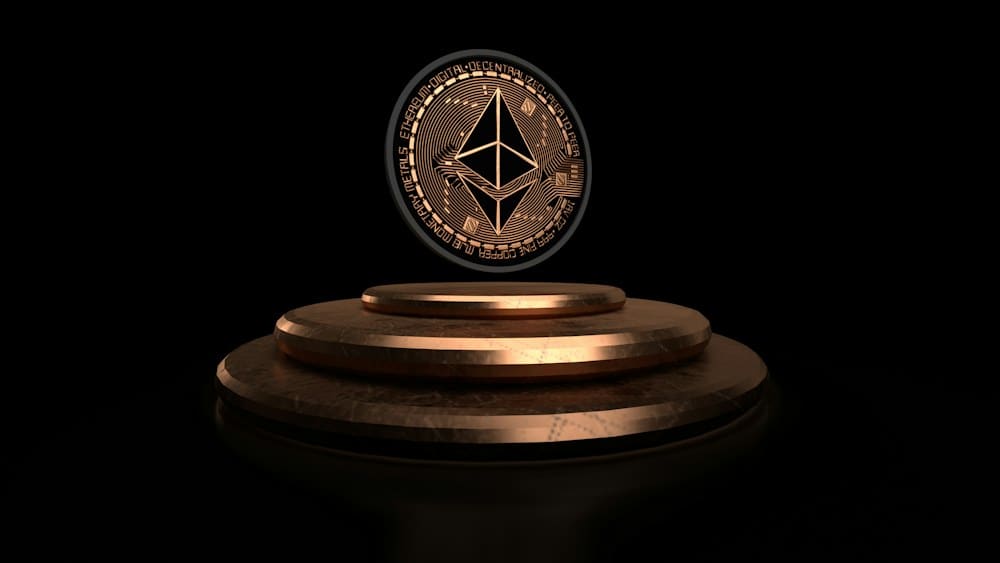
What is Ethereum? Ethereum is a public blockchain that does two jobs at once: it records who owns what, like bitcoin, and it runs small programs called smart contracts that anyone can use and nobody can quietly change. It went live in July 2015, and its native currency is ether, usually written ETH.
If bitcoin is a shared ledger for money, Ethereum is a shared computer that happens to have money built in. That single difference explains gas fees, tokens, decentralized apps, staking, and most of the ways people lose funds on it. This guide works through each piece in plain language.
What is Ethereum used for?
The best way to understand Ethereum is to look at what people actually do with it.
- Send ether. The simplest use: move ETH from one address to another, just like sending bitcoin.
- Create tokens. Anyone can deploy a contract that issues a new token. Stablecoins, governance tokens and many other assets live on Ethereum this way, following shared standards such as ERC-20.
- Trade without a company in the middle. Decentralized exchanges are smart contracts that hold pools of tokens and swap them according to fixed rules.
- Lend and borrow. Lending protocols let users deposit tokens as collateral and borrow against them, with liquidation rules written into code.
- Prove ownership of unique items. Non-fungible tokens (NFTs) use a different standard to record ownership of one-of-a-kind entries.
All of these are programs running on the same shared machine. The network does not care what the program is for; it only checks that the rules were followed and the fee was paid.
Smart contracts: code that runs exactly as written
A smart contract is a program stored at an address on Ethereum. It has its own balance and its own storage, and it runs when someone sends it a transaction.
A simple example: a contract that says “if you send me 1 ETH, I will send you 100 of my tokens.” Once deployed, that rule executes the same way for everyone, every time, without anyone approving it. Every validator runs the code in the Ethereum Virtual Machine (EVM), compares results, and agrees on the outcome.
That brings real strengths and real dangers:
Strengths. Anyone can read the code. Nobody can block you for being from the wrong country or the wrong bank. Contracts can talk to each other, so builders can stack one application on top of another.
Dangers. “Runs exactly as written” includes the bugs. If a contract has a flaw, an attacker can use it, and there is usually no way to undo the result. Many contracts are also not immutable in practice: they include admin keys or upgrade switches that let the team change behavior. Reading whether a contract is upgradeable, and who holds those keys, is part of judging any app.
Ether and gas: how fees work, with the numbers
Every action on Ethereum costs computation, and computation is measured in gas. A plain ETH transfer uses 21,000 gas. A token swap might use several times that. You pay for gas in ether.
Gas prices are quoted in gwei, a small unit of ether. One gwei is 0.000000001 ETH, or one billionth of an ether.
Since an upgrade in 2021 known as EIP-1559, the fee per unit of gas has two parts:
- Base fee. Set automatically by the network according to how full recent blocks were. This part is burned, meaning permanently destroyed, not paid to anyone.
- Priority fee (tip). An extra amount you choose, paid to the validator, to encourage faster inclusion.
A worked example
Say the base fee is 20 gwei and you add a 2 gwei tip. You send a simple transfer.
| Step | Calculation | Result |
|---|---|---|
| Gas used | Simple ETH transfer | 21,000 gas |
| Price per gas | 20 gwei base + 2 gwei tip | 22 gwei |
| Total fee in gwei | 21,000 × 22 | 462,000 gwei |
| Total fee in ETH | 462,000 × 0.000000001 | 0.000462 ETH |
| Burned | 21,000 × 20 gwei | 0.00042 ETH |
| Paid to validator | 21,000 × 2 gwei | 0.000042 ETH |
Now run the same arithmetic for a swap that uses 150,000 gas at the same price: 150,000 × 22 = 3,300,000 gwei, or 0.0033 ETH. Same network, same moment, about seven times the cost, simply because the program did more work. These numbers are illustrative; real base fees rise and fall with demand, sometimes sharply.
Two lessons follow. Check the estimated fee before confirming, especially for complex actions. And a failed transaction still costs gas, because the network did the work of running it before it failed.
Proof of stake and The Merge
When Ethereum launched it used proof of work, the same mining approach as bitcoin. In September 2022 it switched to proof of stake in an upgrade called The Merge.
Under proof of stake, there are no miners. Instead, validators lock up ether as collateral, known as staking. Running a full validator requires 32 ETH. Validators propose blocks and vote, or “attest,” on blocks proposed by others.
The timing is regular. Time is divided into slots of 12 seconds, and each slot has a chance for one block. Thirty-two slots make an epoch: 32 × 12 = 384 seconds, or 6.4 minutes.
Why should validators be honest? Because their stake is at risk. Validators who go offline lose small amounts of their reward. Validators who break the rules in provable ways, such as signing two conflicting blocks, can be “slashed,” losing part of their stake and being removed.
The Merge reduced Ethereum’s energy consumption by more than 99%, since it no longer needed vast amounts of mining hardware. For ordinary users nothing changed: addresses, balances and contracts carried over as they were. Any message telling you to “upgrade” or “migrate” your ETH because of The Merge was, and still is, a scam.
How Ethereum differs from Bitcoin
| Bitcoin | Ethereum | |
|---|---|---|
| Main design goal | Simple, robust digital money | General-purpose programmable platform |
| Consensus | Proof of work | Proof of stake since 2022 |
| Block timing | About 10 minutes | 12-second slots |
| Supply | Hard cap of 21 million | No fixed cap; new issuance offset in part by fee burning |
| Programmability | Deliberately limited | Full smart contracts |
| Pace of change | Slow and conservative | Regular planned upgrades |
Neither column is a verdict. A narrower design has fewer things that can go wrong; a broader one can do more. Both networks are worth understanding on their own terms.
Layer 2 networks, briefly
Ethereum’s main chain, often called layer 1, has limited space per block. To make transactions cheaper, many users rely on layer 2 networks, often called rollups. These process transactions off the main chain, bundle them, and post compressed results back to Ethereum.
The practical points for a beginner:
- Funds on a layer 2 are not automatically visible on layer 1. Moving between them requires a bridge, and bridges have been a frequent target of large hacks.
- The same address format often works on several networks. Sending tokens on the wrong network is a common, sometimes unrecoverable, mistake. Always confirm which network a recipient expects.
- Each layer 2 has its own security model and trade-offs. “Built on Ethereum” does not mean “as secure as Ethereum.”
Risks to understand before using Ethereum
Smart contract risk. Bugs and exploits can drain funds from apps, even well-known ones. Audits reduce risk; they do not remove it.
Approval risk. Many apps ask you to approve them to spend your tokens. A malicious approval can let an attacker empty that token from your wallet later. Our guide on how to spot crypto scams explains approval drainers in detail.
Key management. As with bitcoin, whoever holds your private key or recovery phrase controls your funds. Read crypto wallets explained before holding any meaningful amount yourself.
Price volatility. Ether’s price can move sharply in either direction. Fees, which are paid in ETH, swing with it.
Fake tokens and apps. Anyone can create a token with any name, including names copied from real projects. A token appearing in your wallet does not mean it is real or valuable.
Where to go next
The official ethereum.org site is the best starting point for primary documentation, including guides to wallets, staking and the network’s roadmap. Bookmark it rather than searching for it each time, since lookalike sites are common.
For more explainers in a sensible order, visit our learn hub.
So, what is Ethereum? A shared computer that thousands of independent validators run together, with ether as the fuel and the collateral. Understand gas, contracts and keys, and most of what happens on it stops being mysterious.
This article is for educational purposes only and is not financial advice. be1crypto.com is an independent publication and is not a trading platform.
Frequently asked questions
What is Ethereum in simple terms?
Ethereum is a public blockchain that can run programs, called smart contracts, as well as record payments. Thousands of computers keep the same copy of its state and execute the same code, so no single company controls the result. Its native currency, ether (ETH), is used to pay the fees for every transaction and computation, and is staked by validators to secure the network.
What is the difference between Ethereum and ether?
Ethereum is the network: the software, the validators and the shared ledger. Ether, written ETH, is the currency native to that network. You pay gas fees in ether, validators stake ether, and exchanges list ether. In casual speech people often say they bought Ethereum, but strictly what they bought is ether, the asset that lives on Ethereum.
What was The Merge?
The Merge was the 2022 upgrade that switched Ethereum from proof of work, where miners competed with computing power, to proof of stake, where validators lock up ether as collateral. It cut the network's energy use by more than 99 percent and did not require ordinary users to do anything. Balances, addresses and smart contracts carried over unchanged.
Why are Ethereum fees sometimes high?
Each block has limited space, and users bid for it. When many people want to transact at once, the base fee rises automatically and users add tips to get included sooner. Complex actions, such as swaps on a decentralized exchange, use more gas than a simple transfer, so they cost more. Layer 2 networks exist largely to make the same actions cheaper.
Keep reading
-
 Explainers What a Blockchain Based Trading Platform Really Is (On-Chain vs Off-Chain) Every fill is a transaction, or none of them are. The difference decides what you pay, who holds your keys, and how fast a trade is final.
-
 Explainers Is Crypto a Trading Platform? What the Word Actually Means Crypto is what you buy. A platform is where you buy it. Getting that distinction right is the first defense against losing money to a clone site.
-
 Explainers What Is Bitcoin? A Plain-English Guide to How It Works Bitcoin is a shared ledger that nobody owns, a fixed supply schedule, and a set of rules that thousands of computers enforce at once. Here is how the pieces fit.
New to crypto? Start with the basics
Be1Crypto.com explains Bitcoin, Ethereum, wallets and market structure in plain English, so you can make your own decisions with your eyes open.